It looks like the USGA is finally getting a little more serious about giving us timely updates on the progress of Sectional Qualifying for the 2014 U.S. Women's Open at Pinehurst. They've also provided us with an easier-to-find list of players who are already fully exempt into the biggest tournament in women's golf.
What they could still do a better job of is linking to the actual tournament sites. For instance, today's qualifier at the Honors Golf Club in Carrollton, TX, has a fantastic field list that includes Maria McBride, Ariya Jutanugarn, Ashleigh Simon, Thidapa Suwannapura, Belen Mozo, Jaye Marie Green, Ryann O'Toole, Vicky Hurst, Giulia Molinaro, Lisa McCloskey, Maria Hernandez, Paola Moreno, and Casey Danielson. Would it have been so hard to post the link on the USGA Sectional Qualifying page? Along with one to the live leaderboard?
Every year thousands of people come to Mostly Harmless for a comprehensive list of U.S. Women's Open sectional qualifying sites with live links to relevant and timely information. Unfortunately, I don't have time this week to do this work for the USGA. I recommend following the thread at Seoul Sisters.com for faster information than you're likely to get from the USGA! But you'd think by now they'd have figured out how to do it themselves!
Showing posts with label interwebitudinality. Show all posts
Showing posts with label interwebitudinality. Show all posts
Monday, May 5, 2014

Monday, August 20, 2012
OK, So Now How Long Before Augusta Hosts an LPGA Event?
Friday, December 16, 2011
Editor's Note: A profile of Yani Tseng appears on pg. 74.
Man, those editors at Golf Magazine are quick with the comebacks! After LPGA Commissioner Mike Whan politely but resolutely roasted their ridiculous decision to name Rory McIlroy their Player of the Year instead of everyone's obvious choice, Ya Ni Tseng, they responded with the bon mot that I took for my title.
I can come up with several ways of slicing the tone of that little note. What do you got?
I'm leaning toward the last reading, given that the one line from the letter they chose to blow up in a graphic--"Yani certainly doesn't need me--or anyone else--to validate her position"--seems to suggest that Whan didn't need to write the letter and they didn't need to award her the POY.
Nicely done, editors of Golf Magazine. Well played!
[Update 1 (12/19/11, 4:30 pm): Armchair Golf has picked up this story; instead of focusing on the editors' anemic response, Neil summarizes Whan's letter and adds in telling supporting evidence that Whan didn't cite (like the fact that 96% of those Golf Magazine polled on Facebook thought Ya Ni should be POY!).]
I can come up with several ways of slicing the tone of that little note. What do you got?
- Move-it-along-nothing-to-see-here just-the-facts blaseness: "[Whistling casually] Thank you for your letter. Can we interest you in our table of contents?"
- Embarrassed defensiveness: "Hey, we screwed up, we know, but at least we mentioned her in this issue, right? Right? Come on, you guys, stop being so harsh on us! ....Please?"
- Brazen arrogance: "Yeah, Ya Ni had a pretty good year. Not a Player of the Year year. A pg. 74 year. Siddown and shaddup, Commish!"
I'm leaning toward the last reading, given that the one line from the letter they chose to blow up in a graphic--"Yani certainly doesn't need me--or anyone else--to validate her position"--seems to suggest that Whan didn't need to write the letter and they didn't need to award her the POY.
Nicely done, editors of Golf Magazine. Well played!
[Update 1 (12/19/11, 4:30 pm): Armchair Golf has picked up this story; instead of focusing on the editors' anemic response, Neil summarizes Whan's letter and adds in telling supporting evidence that Whan didn't cite (like the fact that 96% of those Golf Magazine polled on Facebook thought Ya Ni should be POY!).]
Friday, December 3, 2010
Paging Geoff Shackelford
Yo, Geoff! You love it when players mouth off about ridiculous (re)designs, right? Well, get a load of what Laura Davies said after her opening 70 at the LPGA Tour Championship left her 3 shots behind leaders Seon Hwa Lee and Amy Yang:
So of course the golf gods punished her with a 2nd-round 84 that ended her disappointing LPGA campaign in 2010 on a sour note. But she can still get her 6th LET win of the season next week in Dubai and take their money title. Any of this interesting to you in the slightest?
[Update 1 (11:18 pm): Nice rapid response by the Shack!]
[Update 2 (11:45 pm): Hey, visitors from Shack-land, check out this Randall Mell piece for more on Davies's year!]
[Update 3 (11:50 pm): More Randall Mell, this time with quotes from Brittany Lincicome and Paula Creamer on the greens at Grand Cypress.]
[Update 4 (12/4/10, 12:36 am): Geoff's regulars might be amused to see that I was nice to him here compared to Steve Elling. It's all about the love here at Mostly Harmless.]
Q. Tell us about the course. It's pretty challenging. What do you think of it?
LAURA DAVIES: This one? It's my favorite course in Florida. We played here years ago in the late 90s and 2000. It's always been my favorite course in Florida. I like the grass here. It's better. It's not so--the weird grass that Florida has. I don't know the difference between them but it's much spongier and I like it. The layout is fantastic, but the grass is good, too. I don't know what they did with the greens. Someone went mental on the greens. I don't know what happened there. Someone said Jack Nicklaus did it, but I don't believe that. Someone said Jack changed it; well, he must have been having a very bad day. (Laughter).
Q. Someone said that he had to oversee it for it to remain a Nicklaus design.
LAURA DAVIES: Well, he might have been in a helicopter above (laughter) or flown over and said "that will do" or something. There's no way Jack Nicklaus designed these greens. They are mental.
So of course the golf gods punished her with a 2nd-round 84 that ended her disappointing LPGA campaign in 2010 on a sour note. But she can still get her 6th LET win of the season next week in Dubai and take their money title. Any of this interesting to you in the slightest?
[Update 1 (11:18 pm): Nice rapid response by the Shack!]
[Update 2 (11:45 pm): Hey, visitors from Shack-land, check out this Randall Mell piece for more on Davies's year!]
[Update 3 (11:50 pm): More Randall Mell, this time with quotes from Brittany Lincicome and Paula Creamer on the greens at Grand Cypress.]
[Update 4 (12/4/10, 12:36 am): Geoff's regulars might be amused to see that I was nice to him here compared to Steve Elling. It's all about the love here at Mostly Harmless.]
Wednesday, November 17, 2010
The Real Reason Tiger Started Tweeting
Check out what Cheyenne Woods just tweeted. Now Tiger can make snappy comebacks about her massive following of 306 and counting in the same medium she's using, I suppose....
Friday, September 3, 2010
Thursday, July 8, 2010
How Low Can the AP Go?
I haven't made the effort to identify who's responsible for the latest U.S. Women's Open preview from the Associated Press, but talk about using old talking points! The title: "Americans No Longer Dominate U.S. Women's Open." The theme: how badly Americans have been doing lately against international competition on women's golf's biggest stage.
The problems:
(1) Even Beth Ann Baldry, who's not the best-informed writer on women's golf in the world, knows that Cristie Kerr is the favorite to survive and maybe even tame Oakmont. Yet our anonymous AP writer takes 5 seconds on LPGA.com's stats page and decides that because she "doesn't rank among the LPGA's Top 10 in driving distance, accuracy or putting," the fact that she's #1 in scoring average and putts per green in regulation, #2 in wins, winnings, Player of the Year points, rounds in the 60s, and rounds under par, #4 in birdies per round, and #5 in greens in regulation (72.2%) and top-10-finish rate--oh, and by the way, is averaging almost 257 yards off the tee, hitting 72.4% of her fairways, and averaging 28.68 putts per round--just doesn't matter. 2 wins in the last 3 events? Pshaw. A 2-tournament winning streak in her last 2 events entered? Not even worth mentioning.
And when he (I'll betcha anything a guy wrote this!) tries to praise Kerr, he even gets the storyline wrong:
Um, dude, Kerr had chances to win 2 majors last year and let them slip through her fingers. Nobody stepped up to challenge her in the LPGA Championship for any serious length of time. Kerr still has to prove she's a closer in majors. That and the fact that she won at Locust Hill with a leaky driver--something that Oakmont will penalize much more severely--are the doubts that any knowledgable writer should be emphasizing about Kerr's chances to get her 2nd Open, 3rd major, and 15th career victory on the LPGA. Read Mike Dudurich or Randall Mell or Tim Maitland if you want to understand where Cristie Kerr is this season. Not this hack.
(2) So when most writers (and even Seouls Sisters fans like bangkokbobby) are focusing on how important for the tour and how inspiring for other American golfers Kerr's dominating victory at the LPGA Championship has been--do you think it's a coincidence that Christina Kim almost followed Kerr's formula (change putters, get focused mentally, and bring it on) to the letter last week and moved from 73rd to 59th in the Rolex Rankings with her playoff loss to Na Yeon Choi in the process?--our dogged correspondent decides to dig even deeper. What has he discovered?
I have 2 responses. 1st, how is this news? The supposed lack of American dominance has been going on for 15 years! But 2nd, is it really fair to American golfers to hold them to a higher standard than the golfers of every other nation? Read that paragraph again: Americans have won the Open more time than golfers from any other nation in the world! We're still #1, baby! w00t!!
Let's break this down further. Of the 8 players last year with the best chance to win, 4 were American (including naturalized citizen Candie Kung). Even with Inbee Park winning by a comparatively large margin in 2008, 3 Americans were among the 9 in the mix at some point on that Sunday. Yeah, Cristie Kerr basically carried the flag alone when she won in 2007, but the year before that 4 Americans were challenging Annika Sorenstam (who beat Pat Hurst in a playoff) and Se Ri Pak among those few players less than 7 shots off Sorenstam's and Hurst's pace. In 2005, Birdie Kim beat 2 promising American amateurs, Morgan Pressel and Brittany Lang (who have since developed into elite professionals), by 2 shots with her miraculous walkoff hole-out from the bunker, and Natalie Gulbis made it 3 Americans in the top 5. My point in bringing up all this not-so-ancient history is that Americans have disproportionately been in the mix in the Open, even in the last few years when the women's game's globalization has intensified exponentially.
Yes, I know there's a big difference between being in contention and winning. My point is that expecting American domination on the LPGA is incredibly out-of-date, just as it would be to expect Korean domination, or Japanese domination, or Spanish domination--or, for that matter, any single country's domination. The world of women's golf is by no means flat, and its center of gravity may well have shifted to Asia sometime last decade, but that's all the more reason to face reality with something less than jaw-on-the-ground stupefaction and incredulity.
(3) The U.S. Women's Open has actually been the staging ground for a lot of American cinderellas in recent years, from Michelle Wie to Stacy Lewis to Alexis Thompson to Jean Reynolds. And as Stuart Hall points out, it's become the locus of a debate about attending college vs. turning pro for teenagers of all nationalities. It's pretty significant that long-heralded, big-hitting Hawaii native Kimberly Kim turned pro at about the same time that just-shy-of-Hall of Famer Meg Mallon announced her retirement, eh? And that, as David Shefter and Rhonda Glenn point out, there are plenty of great stories from other new pros and top amateurs--including Americans Jennifer Song (ok, she had dual citizenship with South Korea, so both countries get to claim her) and Tiffany Joh (who's made the Open for the 1st time in her life!).
(4) Finally, it's not like I'm loving the new flavor of the week--how gosh ding dang tough the USGA can make an already over-the-top Oakmont--but at least that one's a case of lowering casual viewer/reader expectations scoring-wise (when it's not an excuse for having fun with a damsels in distress storyline). Americans having just a slightly better chance of winning this Open than golfers from any other single country is just "dog bites man" these days.
Look, it's not that I'm expecting Pulitzer-prize winning material from the AP when it comes to covering the LPGA. I'd accept just basic competence, thank you very much. That, and this Stephanie Wei interview with Paige Mackenzie edited down into a short article and sent around to every newspaper in the country!
The problems:
(1) Even Beth Ann Baldry, who's not the best-informed writer on women's golf in the world, knows that Cristie Kerr is the favorite to survive and maybe even tame Oakmont. Yet our anonymous AP writer takes 5 seconds on LPGA.com's stats page and decides that because she "doesn't rank among the LPGA's Top 10 in driving distance, accuracy or putting," the fact that she's #1 in scoring average and putts per green in regulation, #2 in wins, winnings, Player of the Year points, rounds in the 60s, and rounds under par, #4 in birdies per round, and #5 in greens in regulation (72.2%) and top-10-finish rate--oh, and by the way, is averaging almost 257 yards off the tee, hitting 72.4% of her fairways, and averaging 28.68 putts per round--just doesn't matter. 2 wins in the last 3 events? Pshaw. A 2-tournament winning streak in her last 2 events entered? Not even worth mentioning.
And when he (I'll betcha anything a guy wrote this!) tries to praise Kerr, he even gets the storyline wrong:
Give her the 36- or 54-hole lead, like she owned last year at cross-state Saucon Valley before losing out to Ji, and it may be difficult to get it back.
Um, dude, Kerr had chances to win 2 majors last year and let them slip through her fingers. Nobody stepped up to challenge her in the LPGA Championship for any serious length of time. Kerr still has to prove she's a closer in majors. That and the fact that she won at Locust Hill with a leaky driver--something that Oakmont will penalize much more severely--are the doubts that any knowledgable writer should be emphasizing about Kerr's chances to get her 2nd Open, 3rd major, and 15th career victory on the LPGA. Read Mike Dudurich or Randall Mell or Tim Maitland if you want to understand where Cristie Kerr is this season. Not this hack.
(2) So when most writers (and even Seouls Sisters fans like bangkokbobby) are focusing on how important for the tour and how inspiring for other American golfers Kerr's dominating victory at the LPGA Championship has been--do you think it's a coincidence that Christina Kim almost followed Kerr's formula (change putters, get focused mentally, and bring it on) to the letter last week and moved from 73rd to 59th in the Rolex Rankings with her playoff loss to Na Yeon Choi in the process?--our dogged correspondent decides to dig even deeper. What has he discovered?
An American victory in its national championship, once all but a certainty, now would be a surprise. Cristie Kerr is the only American to win in the last five years and, since 1995, there have been nearly as many South Korean champions (4) as U.S. winners (5). By comparison, Americans won all but five Women's Opens from 1946-1994.
I have 2 responses. 1st, how is this news? The supposed lack of American dominance has been going on for 15 years! But 2nd, is it really fair to American golfers to hold them to a higher standard than the golfers of every other nation? Read that paragraph again: Americans have won the Open more time than golfers from any other nation in the world! We're still #1, baby! w00t!!
Let's break this down further. Of the 8 players last year with the best chance to win, 4 were American (including naturalized citizen Candie Kung). Even with Inbee Park winning by a comparatively large margin in 2008, 3 Americans were among the 9 in the mix at some point on that Sunday. Yeah, Cristie Kerr basically carried the flag alone when she won in 2007, but the year before that 4 Americans were challenging Annika Sorenstam (who beat Pat Hurst in a playoff) and Se Ri Pak among those few players less than 7 shots off Sorenstam's and Hurst's pace. In 2005, Birdie Kim beat 2 promising American amateurs, Morgan Pressel and Brittany Lang (who have since developed into elite professionals), by 2 shots with her miraculous walkoff hole-out from the bunker, and Natalie Gulbis made it 3 Americans in the top 5. My point in bringing up all this not-so-ancient history is that Americans have disproportionately been in the mix in the Open, even in the last few years when the women's game's globalization has intensified exponentially.
Yes, I know there's a big difference between being in contention and winning. My point is that expecting American domination on the LPGA is incredibly out-of-date, just as it would be to expect Korean domination, or Japanese domination, or Spanish domination--or, for that matter, any single country's domination. The world of women's golf is by no means flat, and its center of gravity may well have shifted to Asia sometime last decade, but that's all the more reason to face reality with something less than jaw-on-the-ground stupefaction and incredulity.
(3) The U.S. Women's Open has actually been the staging ground for a lot of American cinderellas in recent years, from Michelle Wie to Stacy Lewis to Alexis Thompson to Jean Reynolds. And as Stuart Hall points out, it's become the locus of a debate about attending college vs. turning pro for teenagers of all nationalities. It's pretty significant that long-heralded, big-hitting Hawaii native Kimberly Kim turned pro at about the same time that just-shy-of-Hall of Famer Meg Mallon announced her retirement, eh? And that, as David Shefter and Rhonda Glenn point out, there are plenty of great stories from other new pros and top amateurs--including Americans Jennifer Song (ok, she had dual citizenship with South Korea, so both countries get to claim her) and Tiffany Joh (who's made the Open for the 1st time in her life!).
(4) Finally, it's not like I'm loving the new flavor of the week--how gosh ding dang tough the USGA can make an already over-the-top Oakmont--but at least that one's a case of lowering casual viewer/reader expectations scoring-wise (when it's not an excuse for having fun with a damsels in distress storyline). Americans having just a slightly better chance of winning this Open than golfers from any other single country is just "dog bites man" these days.
Look, it's not that I'm expecting Pulitzer-prize winning material from the AP when it comes to covering the LPGA. I'd accept just basic competence, thank you very much. That, and this Stephanie Wei interview with Paige Mackenzie edited down into a short article and sent around to every newspaper in the country!
Wednesday, May 5, 2010
call it science can be fun
color names by men and women as investigated by a cartoonist, with illustrations
Monday, May 3, 2010
Blow Your Nose for Peace
I attended yesterday's (2 May 2010) anti-nuke demonstration in Manhattan, at which the Japanese contingent out-numbered all others by three or four to one. Some of the Japanese were handing out small packets of facial tissue, like this:

I can't read Japanese, but I recognize the number 9 when I see it. In this context that means Article 9 of the Japanese Constitution, the constitution imposed on them after WWII. Article 9 prohibits the state from waging war. Perhaps the Japanese are telling us that the U.S. Constitution needs a similar article? Here's the other side of the pack of tissue:

. . . where you found this insert:
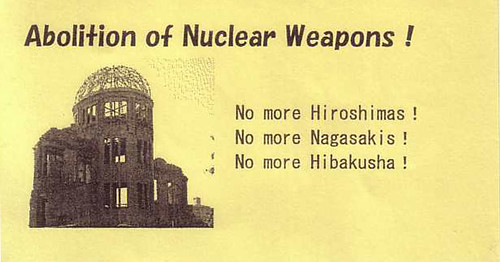
The Hibakusha are the survivors of Hiroshima and Nagasaki.
Thursday, December 24, 2009
'Twas the Afternoon Before Honika... Uh, Two Weeks Ago
OK, so I'm a little late with this, but I finally finished grading and it's time to celebrate! Actually, T-Joh is to blame for this departure from my usual anime Hanukah thing:
That's the real Lady Gaga in there, right?
For background on Smooth-E, check out this youtube timeline of Hanukah-themed parody songs:
Merry QSMS, everyone!
[Update 1 (12:24 pm): OMG, I'm such a bad Jew I even got the title and timing of this post wrong! Should have posted it at sundown so I could have called it "'Twas the Sundown Before Honika... Uh, Two Weeks Ago"! Yeesh.]
That's the real Lady Gaga in there, right?
For background on Smooth-E, check out this youtube timeline of Hanukah-themed parody songs:
Merry QSMS, everyone!
[Update 1 (12:24 pm): OMG, I'm such a bad Jew I even got the title and timing of this post wrong! Should have posted it at sundown so I could have called it "'Twas the Sundown Before Honika... Uh, Two Weeks Ago"! Yeesh.]
Monday, July 13, 2009
Dear Media: This Ain't Reality TV
In one of my last updates to my not-quite-live-blogging the final round of the U.S. Women's Open, I had occasion to ask,
Whether it was Leonard Shapiro hoping for a Cristie Kerr win or Michael Arkush bemoaning a Paula Creamer moving day implosion, something fishy was in the air this week, and it wasn't just those doing the color commentary who were the source of it. Consider who among the following 3 pairs of golfers captured the imagination and attention of the national media in the Sunday game stories you read today.
Yeah, yeah, beyond the fact that it's always the blonde American LPGAers who get the word count from the U.S. media, I get it that Kerr and Lincicome have each won a major recently and that Creamer may well be the best player on tour without one. Yes, Suzann Pettersen also made a late birdie to join Creamer and Miyazato as co-leaders in the clubhouse until Lincicome, Kim, and Kung surpassed them, so it's not just the Taiwan-born, Korean, or Japanese players who fall outside the media spotlight. And yes, I'll even confess to feeling the same things that lead to these kinds of oversights: I was disappointed 2 Sundays ago when Morgan Pressel's dramatic comeback on Eunjung Yi at the Farr came just short.
But a 1st LPGA win for my #11-ranked Super Soph is less of a story than my #2-ranked Junior Mint coming back from a mini-slump this season to get her 2nd career win and 1st major with a walkoff birdie on women's golf's biggest stage. And the fact that she beat Kung, Kim, Miyazato, and Pettersen is just as significant as the fact that she beat Kerr, Lincicome, and Creamer.
I'm off to take out my frustrations on the course--for the 1st time since last August, so I'm pretty excited. Maybe in the meantime someone in the national media will prove me wrong and find a compelling way to frame what really happened at Saucon Valley rather than focusing only on the news that's "fit to print" in their eyes. And maybe everyone will realize that the LPGA's future doesn't rest on one individual or nationality, that the point of sports is the thrilling competition itself.
Yeah, and maybe I'll break 75 on The Easiest Course in the World today.
[Update 1 (12:09 pm): Well, I couldn't even break 80 today (the rust on my 30-to-90 yard game was something fierce!), but I got to catch up with one of my golfing buddies from years ago and we had a fun 3 and a half hours. Nice to come back to find that Jay Busbee's got my back (and a link to a very good Brian Murphy piece)!]
[Update 2 (12:18 pm): Also a nice overview from Amy Ellis Nutt out of the Newark Star-Ledger. Have I misunderestimated the national media?]
[Update 3 (12:30 pm): But the basic question remains: will the national media be able to get the story right? My benchmark is whether they understand the tournament and final round as well as long-time LPGA bloggers Hound Dog and Bill Jempty.]
[Update 4 (1:15 pm): The smaller-market golf writers are doing a good job. Here's Mark Wogenrich out of PA's Lehigh Valley, Andrew Shay out of Bethlehem, and Gerry Dulac out of Pittsburgh. But Mike Kirn of the Philadelphia Daily News, Joe Juliano of the Philadelphia Inquirer, and Michael Whitmer of the Boston Globe did just fine. Still, the SI guys only focus on Creamer's and Kerr's collapses--the rest is on who will replace Bivens. (More on that in another post.)]
[Update 5 (7/14/09, 12:30 pm): John Strege gets it right, as usual.]
When is the national media going to realize that sports are different than a reality tv show and that their job isn't to script an event but to report on it?
Whether it was Leonard Shapiro hoping for a Cristie Kerr win or Michael Arkush bemoaning a Paula Creamer moving day implosion, something fishy was in the air this week, and it wasn't just those doing the color commentary who were the source of it. Consider who among the following 3 pairs of golfers captured the imagination and attention of the national media in the Sunday game stories you read today.
- Cristie Kerr and Candie Kung: the last leader in the clubhouse--and her disappointing bogey on the 71st hole of the tournament--were almost completely eclipsed by the focus on Kerr's struggles with her game.
- Brittany Lincicome and In-Kyung Kim: the player who was actually tied for the lead late on the back 9--and who bogeyed the final hole to fall out of a tie with Kung--gets eclipsed by a player who made a charge early on the back but fizzled from 15 on.
- Paula Creamer and Ai Miyazato: both players made late birdies to become the 1st leaders in the clubhouse (at +4) to actually put a little pressure on those in the final pairings, but you'll only find out about 1 of them if you rely on the national media.
Yeah, yeah, beyond the fact that it's always the blonde American LPGAers who get the word count from the U.S. media, I get it that Kerr and Lincicome have each won a major recently and that Creamer may well be the best player on tour without one. Yes, Suzann Pettersen also made a late birdie to join Creamer and Miyazato as co-leaders in the clubhouse until Lincicome, Kim, and Kung surpassed them, so it's not just the Taiwan-born, Korean, or Japanese players who fall outside the media spotlight. And yes, I'll even confess to feeling the same things that lead to these kinds of oversights: I was disappointed 2 Sundays ago when Morgan Pressel's dramatic comeback on Eunjung Yi at the Farr came just short.
But a 1st LPGA win for my #11-ranked Super Soph is less of a story than my #2-ranked Junior Mint coming back from a mini-slump this season to get her 2nd career win and 1st major with a walkoff birdie on women's golf's biggest stage. And the fact that she beat Kung, Kim, Miyazato, and Pettersen is just as significant as the fact that she beat Kerr, Lincicome, and Creamer.
I'm off to take out my frustrations on the course--for the 1st time since last August, so I'm pretty excited. Maybe in the meantime someone in the national media will prove me wrong and find a compelling way to frame what really happened at Saucon Valley rather than focusing only on the news that's "fit to print" in their eyes. And maybe everyone will realize that the LPGA's future doesn't rest on one individual or nationality, that the point of sports is the thrilling competition itself.
Yeah, and maybe I'll break 75 on The Easiest Course in the World today.
[Update 1 (12:09 pm): Well, I couldn't even break 80 today (the rust on my 30-to-90 yard game was something fierce!), but I got to catch up with one of my golfing buddies from years ago and we had a fun 3 and a half hours. Nice to come back to find that Jay Busbee's got my back (and a link to a very good Brian Murphy piece)!]
[Update 2 (12:18 pm): Also a nice overview from Amy Ellis Nutt out of the Newark Star-Ledger. Have I misunderestimated the national media?]
[Update 3 (12:30 pm): But the basic question remains: will the national media be able to get the story right? My benchmark is whether they understand the tournament and final round as well as long-time LPGA bloggers Hound Dog and Bill Jempty.]
[Update 4 (1:15 pm): The smaller-market golf writers are doing a good job. Here's Mark Wogenrich out of PA's Lehigh Valley, Andrew Shay out of Bethlehem, and Gerry Dulac out of Pittsburgh. But Mike Kirn of the Philadelphia Daily News, Joe Juliano of the Philadelphia Inquirer, and Michael Whitmer of the Boston Globe did just fine. Still, the SI guys only focus on Creamer's and Kerr's collapses--the rest is on who will replace Bivens. (More on that in another post.)]
[Update 5 (7/14/09, 12:30 pm): John Strege gets it right, as usual.]
Tuesday, September 2, 2008
Paging Carolyn Bivens
Thanks to Geoff Shackelford and Ryan Ballengee for calling my attention to the Carolyn Bivens interview with Beth Ann Baldry and the Ron Sirak story that contains quotes from the Commissioner on the new and as yet unformed English proficiency requirement for LPGA membership. I thought I was done writing about this when I closed out my little trilogy on the subject. But I should have known better. A blog named after a Douglas Adams novel is probably doomed to stretch the meaning of the word "trilogy." (Guess I've got another post on this coming, then.)
You see, Bivens made this personal with this western New York blogger when her office leaked that the straw that broke the camel's back came (according to Sirak) "when Eun-Hee Ji won the Wegmans LPGA in June and was unable to deliver the victory speech in English." I'm assuming we'll soon be hearing angry denials from both Wegmans and the tournament organizers--who have secured professors and students from the University of Rochester's Simon School as translators, footed the bill for tournament webcasts and made a huge deal about their Asian viewership, and generally welcomed international players with open arms--that they had anything to do with the policy. Ji herself is taking one for the team, saying to the Korean media, "At the time, I spoke Korean in the interview. I experienced pricks of conscience as I felt if the latest decision targets me. I'll pay more attention to improving my English." But why should the top player in the LPGA's Class of 2007 feel guilty?
With apologies to Adams fans everywhere, I offer the following Hitchhiker's Guide to the LPGA's defense of its language policy.
1. It's good for the tour's bottom line.
The Commissioner mentions that "The more the audience knows about the business model of the LPGA, the more likely they are to be in agreement." Really? Let's review the reasoning. Futures Tour communications guru Lisa Mickey breaks it down for us:
Sounds good. Never mind that the reason some pros may not utter a single "nice shot" in an entire pro-am round may have more to do with the quality of their playing partners' games than their own language abilities. Never mind that a certain number of pro-am participants may actually know other languages than English. Never mind that there are no threats of suspensions for the English-speaking pros who may happen to be introverted, misanthropic, or just having a bad day. Consider the following major problems with Mickey's logic:
a) "this business depends solely on the personal satisfaction of check writers based on their experiences with the pros": if true, this is an alarming admission, but it's most likely an overstatement. That "solely" there implies that the LPGA isn't making a significant amount of money from its Korean and Japanese TV deals, which is either untrue or suggests that the LPGA isn't counting on any decent American TV deal to sweeten their pot from check writers who base their decisions on projected ratings and advertising revenues, not on their "personal satisfaction" with pros.
But even if Mickey meant "primarily," there are still serious problems with her logic. Consider the LPGA's range of possible responses to sponsors who have problems with the language abilities of a certain small percentage of pros on tour.
i) "We have excellent English instruction programs in place and our players are embracing them. We guarantee this problem will go away. In the meantime, we'll ask the player(s) in question to offer you their personal apologies."
ii) "We're teaming up with with our tournament organizers to fund a team of interpreters from neighboring colleges and universities for every event on tour so that this kind of isolated incident remains one."
iii) "We're sorry your employees and clients have such a problem with some of our international players. Perhaps we can recommend some diversity management training that we've benefitted from ourselves."
iv) "We're sorry you no longer wish to sponsor this tournament. We're sure there will be no negative local, regional, national, or international backlash against your brand if we had to answer questions from the media about why you've withdrawn your sponsorship."
Sure, sticking to your guns and defending all your players might cause you to lose a sponsorship or 2. But you don't need a Ph.D. to recognize that you can offset those losses with new tournaments in places with potential sponsors, pro-am participants, and fans who would be excited to be associated with a young, hot, and global professional golf tour. There must be some companies that want to get their brands better known in Asia and Latin America somewhere in the United States. At the very least, you might consult the latest census for concentrations of Latin American and Asian immigrant and ethnic American populations. You know, places where non-U.S.-based multinationals and transnationals might want to expand their markets? And where tournament organizers may see increased ticket sales?
b) "If the pros can’t communicate, the experience is not a valid return on investment for those individuals sponsoring events and playing in pro-ams": If this is true of events in predominantly English-speaking areas of the United States, then it must be equally true of events in Quebec, Mexico, France, Japan, Korea, Singapore, the Philippines, and China. So when will we see monolingual American players being asked--no, wait, required--to sacrifice their time and effort for the tour's bottom line? As I wrote earlier, "Being able to get by in 2 or more languages is the norm the world over. In reality, it's the monolingual English speakers who need the carrot and stick to venture outside our little world. If we're not willing to legislate it for ourselves, why not leave learning English to economic forces and individual choices like we do with almost everything else?"
But why wouldn't the LPGA be willing to require a minimal level of proficiency in at least one non-English language? Are they perhaps worried that such a policy might be controversial with the public, unpopular with the players, difficult to enact or enforce, risk defections to and fewer Q-School applications from those on other tours, and even open up a competitive advantage for others who might take the opportunity to challenge their monopoly?
Why would they be? After all...
2. It's good for the players.
Mickey dangles the carrot:
Bivens wields the stick:
Never mind that Mickey has never read Multilingual America, much less figured out that the U.S. has no official language. Or that there's nothing unfair about the goal as she describes it--so long as it really applies to all players in any LPGA event. Or that there's a difference between opposing the goal and opposing the penalty. Or that Bivens's hiking the penalty for non-compliance does more to reduce international players' ability to earn their living on the LPGA than any lack of corporate or sponsorship opportunities (the substantial ones of which so far seem to be heading mostly to players named Wie, Gulbis, and Creamer, anyway--and took even Annika many years to earn).
No, the basic problem is with forcing players to do what's good for them. It was Annika and Lorena who set the bar on fitness, not Carolyn Bivens. And it should be Se Ri Pak who sets the bar for the South Koreans who followed her to the LPGA when it comes to English. If you don't trust Se Ri, why not get out of the business of evaluating English proficiency by making LPGA and Futures Tour Q-Schools open only to graduates of U.S. colleges and universities? Isn't a college education good for everyone? And doesn't the U.S. have the best higher education system in the world?
Don't like this solution? Ah, enjoy wading through the USCIS website to figure out whether golfers should be held to the same standards as health professionals or physical therapists.
First drug testing, now language testing. What's next? Don't get me wrong: I'm in favor of drug testing done right. Not only can it help prevent harm to players, but it also helps level the playing field and head off a bodily enhancement arms race (so to speak). The only harm to players for not being multilingual is to their pocketbooks, not their bodies, while the only competitive disadvantage that could possibly come from not knowing English depends on it being the only language golf balls understand.
But don't mind me. After all...
3. People who don't like the policy are overreacting out of ignorance or political bias.
Wait a second: who was it who decided to tell only the Korean players on tour about a policy that hadn't then even been fully formulated--and won't be until December? Who was it who's been offering weak justifications for it--and then mostly through back channels?
As for suggestions from the LPGA office that opinions have been split along Red State/Blue State lines and that the tour will become a political football for Fox News and the New York Times, that dog just won't hunt: language politics cuts across party lines and divides parties. But hey, way to lend credence to your critics' worst fears: not only that you can't figure out how to market the LPGA's international talent to all Americans (taking advantage of "land of opportunity," "model minority," "diversity," and "globalization" scripts, not to mention the higher percentage of devout Christians among the Korean contingent), but more important that you really are reaching out to the English-only movement, that you really do see nativists as a priority demographic to target, and that you're desperate enough to hope this half-baked scheme will help your TV contract negotiations.
The irony in all this is that I still believe the LPGA will tweak its policy by December to address the widespread concerns over its implementation and penalties, so I'm still reserving judgment on its final form. The tragedy is that they've shown themselves more liable to direct friendly fire toward the messenger than to actually engage in that dialogue they say they want.
[Update 1 (3:33 pm): Here's LPGA.com's announcement from Commissioner Bivens and Geoff Shackelford's response to an accompanying memo from Bivens. What do you all think now?]
[Update 2 (3:39 pm): Here's Ryan Ballengee's response to the Sirak story. Hound Dog's comments can be found on the Inside the LPGA podcast.]
[Update 3 (9/3/08, 1:36 am): Too much work to do to listen to HD's podcast for awhile yet (much less Ryan Ballengee's), but his latest post goes out of the way to be fair to the LPGA brass. Too bad the Bivens offensive hasn't gone over so well with State Farm. Still waiting to hear something from Wegmans.]
[Update 4 (2:24 am): From what I've seen on the web, the Golf Channel coverage has been quite fair to the LPGA. For all the hints of sensationalization, PC, and "liberal media" coming out of the LPGA office, the questions and concerns raised sound pretty sensible to me.]
[Update 5 (9/4/08, 11:52 am): Geoff Shackelford connects the dots.]
You see, Bivens made this personal with this western New York blogger when her office leaked that the straw that broke the camel's back came (according to Sirak) "when Eun-Hee Ji won the Wegmans LPGA in June and was unable to deliver the victory speech in English." I'm assuming we'll soon be hearing angry denials from both Wegmans and the tournament organizers--who have secured professors and students from the University of Rochester's Simon School as translators, footed the bill for tournament webcasts and made a huge deal about their Asian viewership, and generally welcomed international players with open arms--that they had anything to do with the policy. Ji herself is taking one for the team, saying to the Korean media, "At the time, I spoke Korean in the interview. I experienced pricks of conscience as I felt if the latest decision targets me. I'll pay more attention to improving my English." But why should the top player in the LPGA's Class of 2007 feel guilty?
With apologies to Adams fans everywhere, I offer the following Hitchhiker's Guide to the LPGA's defense of its language policy.
1. It's good for the tour's bottom line.
The Commissioner mentions that "The more the audience knows about the business model of the LPGA, the more likely they are to be in agreement." Really? Let's review the reasoning. Futures Tour communications guru Lisa Mickey breaks it down for us:
Sponsors and pro-am participants pay money for personal encounters with professionals on the golf course. For sponsors, golf tournaments are an advertising tool and a corporate entertainment tool. The LPGA’s Kraft Nabisco Championship, for example, is a well-established way for food and grocery vendors to network against the backdrop of a professional golf tournament alongside top women golf pros.
Plenty of corporate sponsors align themselves with the NBA and NFL, but that doesn’t necessarily mean they will go one-on-one with Kobe or run downfield for a bomb from Brett Favre. Golf is unique and personal and when people are spending money in this environment, they do it for the chance to spend five or so hours on a golf course with a real playing professional. At the end of the day, if that pro hasn’t been able to utter a single “Nice shot,” then the odds are pretty high that the amateur spending substantial dollars won’t be back next year. Too much of that hurts the tournament. Enough of that hurts the tour.
The LPGA certainly has embraced its global membership and its global membership has made it a much more interesting tour, but while professional golf may be fun and games to the public, it is still, at the end of the day, a business. And, as mentioned before, this business depends solely on the personal satisfaction of check writers based on their experiences with the pros. If the pros can’t communicate, the experience is not a valid return on investment for those individuals sponsoring events and playing in pro-ams. Pro-ams and sponsorships secure tournament purses. Without the purses, there are no tournaments. And without tournaments, there are no tours.
Sounds good. Never mind that the reason some pros may not utter a single "nice shot" in an entire pro-am round may have more to do with the quality of their playing partners' games than their own language abilities. Never mind that a certain number of pro-am participants may actually know other languages than English. Never mind that there are no threats of suspensions for the English-speaking pros who may happen to be introverted, misanthropic, or just having a bad day. Consider the following major problems with Mickey's logic:
a) "this business depends solely on the personal satisfaction of check writers based on their experiences with the pros": if true, this is an alarming admission, but it's most likely an overstatement. That "solely" there implies that the LPGA isn't making a significant amount of money from its Korean and Japanese TV deals, which is either untrue or suggests that the LPGA isn't counting on any decent American TV deal to sweeten their pot from check writers who base their decisions on projected ratings and advertising revenues, not on their "personal satisfaction" with pros.
But even if Mickey meant "primarily," there are still serious problems with her logic. Consider the LPGA's range of possible responses to sponsors who have problems with the language abilities of a certain small percentage of pros on tour.
i) "We have excellent English instruction programs in place and our players are embracing them. We guarantee this problem will go away. In the meantime, we'll ask the player(s) in question to offer you their personal apologies."
ii) "We're teaming up with with our tournament organizers to fund a team of interpreters from neighboring colleges and universities for every event on tour so that this kind of isolated incident remains one."
iii) "We're sorry your employees and clients have such a problem with some of our international players. Perhaps we can recommend some diversity management training that we've benefitted from ourselves."
iv) "We're sorry you no longer wish to sponsor this tournament. We're sure there will be no negative local, regional, national, or international backlash against your brand if we had to answer questions from the media about why you've withdrawn your sponsorship."
Sure, sticking to your guns and defending all your players might cause you to lose a sponsorship or 2. But you don't need a Ph.D. to recognize that you can offset those losses with new tournaments in places with potential sponsors, pro-am participants, and fans who would be excited to be associated with a young, hot, and global professional golf tour. There must be some companies that want to get their brands better known in Asia and Latin America somewhere in the United States. At the very least, you might consult the latest census for concentrations of Latin American and Asian immigrant and ethnic American populations. You know, places where non-U.S.-based multinationals and transnationals might want to expand their markets? And where tournament organizers may see increased ticket sales?
b) "If the pros can’t communicate, the experience is not a valid return on investment for those individuals sponsoring events and playing in pro-ams": If this is true of events in predominantly English-speaking areas of the United States, then it must be equally true of events in Quebec, Mexico, France, Japan, Korea, Singapore, the Philippines, and China. So when will we see monolingual American players being asked--no, wait, required--to sacrifice their time and effort for the tour's bottom line? As I wrote earlier, "Being able to get by in 2 or more languages is the norm the world over. In reality, it's the monolingual English speakers who need the carrot and stick to venture outside our little world. If we're not willing to legislate it for ourselves, why not leave learning English to economic forces and individual choices like we do with almost everything else?"
But why wouldn't the LPGA be willing to require a minimal level of proficiency in at least one non-English language? Are they perhaps worried that such a policy might be controversial with the public, unpopular with the players, difficult to enact or enforce, risk defections to and fewer Q-School applications from those on other tours, and even open up a competitive advantage for others who might take the opportunity to challenge their monopoly?
Why would they be? After all...
2. It's good for the players.
Mickey dangles the carrot:
I doubt that anyone would argue that it is to the [dis]advantage of any player to learn the language of the land where she intends to play. When New Yorker Jean Bartholomew decided to play golf on the Japan LPGA (JLPGA) before she was a U.S.-based LPGA member, she knew part of the equation to her success--and survival--was learning to speak Japanese. Jean learned Japanese and can still converse in the language. The same has been true of such LPGA players as Lorena Ochoa of Mexico, France’s Patricia Meunier-Lebouc, Sweden’s Annika Sorenstam, Paraguay’s Julieta Granada and South Korea’s Jeong Jang. Each learned English and has been able to communicate effectively as LPGA members.... The goal is for every player on the LPGA to easily converse with pro-am partners and tournament sponsors, to effectively communicate basic thoughts about their rounds to media, and to have the ability to express their thoughts and thanks during tournament award ceremonies. What, I ask, is unfair about that?
Bivens wields the stick:
"If these players don't take this step [and learn English], their ability to earn a living is reduced. They will be cut out of corporate and endorsement opportunities. I can't imagine that someone who has thought this through does not realize that in opposing this measure they are penalizing the very people they are trying to help."
Never mind that Mickey has never read Multilingual America, much less figured out that the U.S. has no official language. Or that there's nothing unfair about the goal as she describes it--so long as it really applies to all players in any LPGA event. Or that there's a difference between opposing the goal and opposing the penalty. Or that Bivens's hiking the penalty for non-compliance does more to reduce international players' ability to earn their living on the LPGA than any lack of corporate or sponsorship opportunities (the substantial ones of which so far seem to be heading mostly to players named Wie, Gulbis, and Creamer, anyway--and took even Annika many years to earn).
No, the basic problem is with forcing players to do what's good for them. It was Annika and Lorena who set the bar on fitness, not Carolyn Bivens. And it should be Se Ri Pak who sets the bar for the South Koreans who followed her to the LPGA when it comes to English. If you don't trust Se Ri, why not get out of the business of evaluating English proficiency by making LPGA and Futures Tour Q-Schools open only to graduates of U.S. colleges and universities? Isn't a college education good for everyone? And doesn't the U.S. have the best higher education system in the world?
Don't like this solution? Ah, enjoy wading through the USCIS website to figure out whether golfers should be held to the same standards as health professionals or physical therapists.
First drug testing, now language testing. What's next? Don't get me wrong: I'm in favor of drug testing done right. Not only can it help prevent harm to players, but it also helps level the playing field and head off a bodily enhancement arms race (so to speak). The only harm to players for not being multilingual is to their pocketbooks, not their bodies, while the only competitive disadvantage that could possibly come from not knowing English depends on it being the only language golf balls understand.
But don't mind me. After all...
3. People who don't like the policy are overreacting out of ignorance or political bias.
Wait a second: who was it who decided to tell only the Korean players on tour about a policy that hadn't then even been fully formulated--and won't be until December? Who was it who's been offering weak justifications for it--and then mostly through back channels?
As for suggestions from the LPGA office that opinions have been split along Red State/Blue State lines and that the tour will become a political football for Fox News and the New York Times, that dog just won't hunt: language politics cuts across party lines and divides parties. But hey, way to lend credence to your critics' worst fears: not only that you can't figure out how to market the LPGA's international talent to all Americans (taking advantage of "land of opportunity," "model minority," "diversity," and "globalization" scripts, not to mention the higher percentage of devout Christians among the Korean contingent), but more important that you really are reaching out to the English-only movement, that you really do see nativists as a priority demographic to target, and that you're desperate enough to hope this half-baked scheme will help your TV contract negotiations.
The irony in all this is that I still believe the LPGA will tweak its policy by December to address the widespread concerns over its implementation and penalties, so I'm still reserving judgment on its final form. The tragedy is that they've shown themselves more liable to direct friendly fire toward the messenger than to actually engage in that dialogue they say they want.
[Update 1 (3:33 pm): Here's LPGA.com's announcement from Commissioner Bivens and Geoff Shackelford's response to an accompanying memo from Bivens. What do you all think now?]
[Update 2 (3:39 pm): Here's Ryan Ballengee's response to the Sirak story. Hound Dog's comments can be found on the Inside the LPGA podcast.]
[Update 3 (9/3/08, 1:36 am): Too much work to do to listen to HD's podcast for awhile yet (much less Ryan Ballengee's), but his latest post goes out of the way to be fair to the LPGA brass. Too bad the Bivens offensive hasn't gone over so well with State Farm. Still waiting to hear something from Wegmans.]
[Update 4 (2:24 am): From what I've seen on the web, the Golf Channel coverage has been quite fair to the LPGA. For all the hints of sensationalization, PC, and "liberal media" coming out of the LPGA office, the questions and concerns raised sound pretty sensible to me.]
[Update 5 (9/4/08, 11:52 am): Geoff Shackelford connects the dots.]
Tuesday, April 1, 2008
The Hits Keep Coming
Another non-April Fool's Day joke. Neojaponisme features the first-ever English translation of the first known use of "otaku" in the Japanese media. Hard to believe it took less than 25 years for the term (and culture) to spread around the world.
Yup, that's the Patrick Macias who recently launched OtakuUSA. Here's Part 2:
[Update 4/2/08: For more in this vein, click here!]
[Update 4/10/08: Part II in Neojaponisme's "early history of representations of otaku" series is out.]
Yup, that's the Patrick Macias who recently launched OtakuUSA. Here's Part 2:
[Update 4/2/08: For more in this vein, click here!]
[Update 4/10/08: Part II in Neojaponisme's "early history of representations of otaku" series is out.]
Friday, February 22, 2008
And Now for Something Completely Different: BerubeWatch Returns!
I don't have a tv that does anything more than play videotapes and DVDs these days, so I'm not getting my political humor fix from Stewart and Colbert (and haven't since we left for Japan in late summer of 2006). Sad, eh? Thankfully, Michael Berube has been picking up the slack over at Talking Points Memo. Now we know why he didn't jump all over my call for him to run as mayor of Blogoramaville last summer....
Monday, February 11, 2008
2008 LPGA Preview: Finally, the First Event of the Season!
Following up on my challenge to Ron Sirak to join the PakPickers at the Seoul Sisters discussion board and put his rep where his mouth is, I'm going to post my picks for the LPGA's inaugural SBS Open at Turtle Bay here at Mostly Harmless, along with my reasoning.
The way the PakPickers competition works is that you try to predict the top 12 (in rank order) for each event in the season you care to. You get three alternates in case any of your picks unexpectedly fail to start an event, you get points in each event based on how close you come to being right, and, for every event in which you finish in the top 10 among the Pakpickers, you accumulate season points.
OK, so for each event I look over who's in it, recent tournament history, the previous weeks' results, and my latest Best of the LPGA and Young Guns (formerly Super Soph) rankings--and then I consult the patented 100-Yen Nishijin Mostly Harmless Crystal Ball.
The beginning of the season is easy. I take my predicted top 12 for 2008, remove those on it not in the SBS field, look at who's played the course well and who's playing well coming into the event, and make my guesses. Like so.
1. Annika Sorenstam
2. Paula Creamer
3. Seon Hwa Lee
4. Ji-Yai Shin
45. Stacy Prammanasudh
56. Jee Young Lee
67. Hee-Won Han
78. Angela Park
89. Eun-Hee Ji
910. Morgan Pressel
101. Natalie Gulbis
112. Jeong Jang
12. Pat Hurst
Alts: Pat Hurst, In-Kyung Kim, Ya Ni Tseng,Cristie Kerr
And there you have it. I'm trying to dethrone Hound Dog this year. Think you can do it? If so, don't forget to register before trying to post your own picks....
[Update: Here's Hound Dog's preview!]
[Update 2/12/08: Hound Dog points out Ji-Yai Shin got a sponsor's exemption! Wow!]
The way the PakPickers competition works is that you try to predict the top 12 (in rank order) for each event in the season you care to. You get three alternates in case any of your picks unexpectedly fail to start an event, you get points in each event based on how close you come to being right, and, for every event in which you finish in the top 10 among the Pakpickers, you accumulate season points.
OK, so for each event I look over who's in it, recent tournament history, the previous weeks' results, and my latest Best of the LPGA and Young Guns (formerly Super Soph) rankings--and then I consult the patented 100-Yen Nishijin Mostly Harmless Crystal Ball.
The beginning of the season is easy. I take my predicted top 12 for 2008, remove those on it not in the SBS field, look at who's played the course well and who's playing well coming into the event, and make my guesses. Like so.
1. Annika Sorenstam
2. Paula Creamer
3. Seon Hwa Lee
4. Ji-Yai Shin
1
1
Alts: Pat Hurst, In-Kyung Kim, Ya Ni Tseng,
And there you have it. I'm trying to dethrone Hound Dog this year. Think you can do it? If so, don't forget to register before trying to post your own picks....
[Update: Here's Hound Dog's preview!]
[Update 2/12/08: Hound Dog points out Ji-Yai Shin got a sponsor's exemption! Wow!]
Monday, December 31, 2007
There's an article in the NYTimes today about virtual life for kids:
Some excerpts:
So I'm thinking about a re-working of Lord of the Flies in which the main action takes place in an adult-free virtual world and the growing chaos there threatens to spread beyond that particular virtual world and take down the whole net. Until, that is, the Power Puff Girls come to the rescue.
Some excerpts:
Worlds like Webkinz, where children care for stuffed animals that come to life, have become some of the Web’s fastest-growing businesses. More than six million unique visitors logged on to Webkinz in November, up 342 percent from November 2006, according to ComScore Media Metrix, a research firm.
Club Penguin, where members pay $5.95 a month to dress and groom penguin characters and play games with them, attracts seven times more traffic than Second Life. In one sign of the times, Electric Sheep, a software developer that helps companies market their brands in virtual worlds like Second Life and There.com, last week laid off 22 people, about a third of its staff.
By contrast, Disney last month introduced a “Pirates of the Caribbean” world aimed at children 10 and older, and it has worlds on the way for “Cars” and Tinker Bell, among others. Nickelodeon, already home to Neopets, is spending $100 million to develop a string of worlds. Coming soon from Warner Brothers Entertainment, part of Time Warner: a cluster of worlds based on its Looney Tunes, Hanna-Barbera and D. C. comics properties.
. . . .
But more is at stake than cultivating new revenue streams. For nearly 50 years, since the start of Saturday morning cartoons, the television set has served as the front door to the children’s entertainment business. A child encounters Mickey Mouse on the Disney Channel or Buzz Lightyear on a DVD and before long seeks out related merchandise and yearns to visit Walt Disney World.
Now the proliferation of broadband Internet access is forcing players to rethink the ways they reach young people. “Kids are starting to go to the Internet first,” Mr. Wadsworth said.
. . . .
The power of the virtual worlds business was shown recently when Vivendi announced a plan to buy Activision, a publisher of video games for consoles like the Sony PlayStation 3. Vivendi owns World of Warcraft, a virtual world for adults with more than nine million members and revenue of more than $1 billion.
Still, the long-term appetite for the youth-oriented sites is unclear. Fads have always whipsawed the children’s toy market, and Web sites are no different, analysts warn. Parents could tire of paying the fees, while intense competition threatens to undercut the novelty. There are now at least 10 virtual worlds that involve caring for virtual pets.
Privacy and safety are a growing concern, particularly as companies aim at younger children. Some virtual worlds are now meant to appeal to preschoolers, using pictures to control actions so that reading is not required.
So I'm thinking about a re-working of Lord of the Flies in which the main action takes place in an adult-free virtual world and the growing chaos there threatens to spread beyond that particular virtual world and take down the whole net. Until, that is, the Power Puff Girls come to the rescue.
Sunday, November 25, 2007
Welcome, Crooked Timberers
If you've recently come to Mostly Harmless via this Australian election update, please feel free to hang out, relax, check out the archives. For more from your guide, JP Stormcrow, you can go here or here, or just check out our "politics" tag. Which takes me back to the early days of this here experiment in interwebitudinal fun, back when this blog mattered made a difference was often funny based in Japan, before it became all LPGA and stories for kids all the time. You can tell how much things have changed here when, upon checking out our most recent slew (for us) of visitors and composing this piece, the following associations rattled through what's left of my brain: "Has Berube finally returned to golf blogging? Crooked Timber--now there's a great name for a golf blog! How can I get a joke about a mashie in a post on this? Is a mashie even made of wood? Or is that a niblick? Heh, niblick. Australian politics...hmm, I wonder if Karrie Webb reads Crooked Timber? Bet she's glad the 2007 season is over. Hey, isn't Amy Yang playing out of Australia these days? Wouldn't it be cool if she did well in Q-School? Now there's a kid with a good head on her shoulders. Ah, kids. Time to check on onechan and imoto." The end.
Subscribe to:
Posts (Atom)